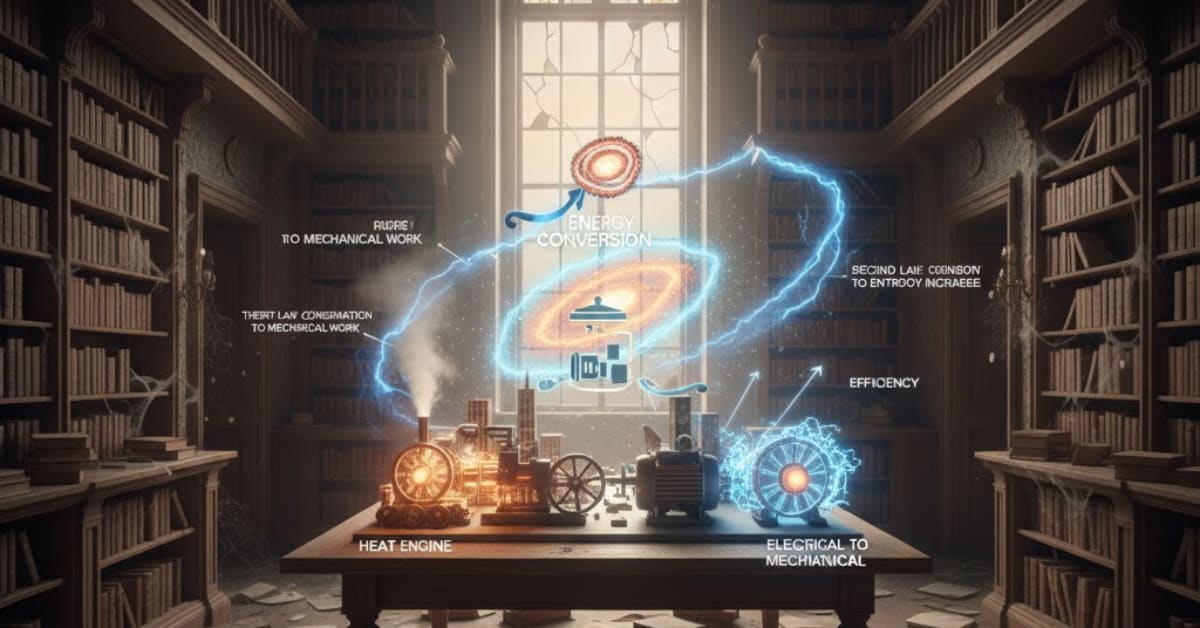
A Beginner's Guide to Thermodynamics and Energy Flow
By Sidra Tayyab · Education & Learning · 2025-11-29
A Beginner's Guide to Thermodynamics and Energy Flow
Thermodynamics is the branch of physics that studies how energy moves and transforms — from heat flowing into a steam engine to the chemical energy that powers your body. Its principles govern everything from the efficiency of a car engine to the reason you need to eat to stay warm. Despite its reputation as a challenging subject, the core ideas of thermodynamics are deeply intuitive once you understand the basic concepts. Here's your beginner's guide to one of physics' most powerful and far-reaching fields.
1. What Is Thermodynamics?
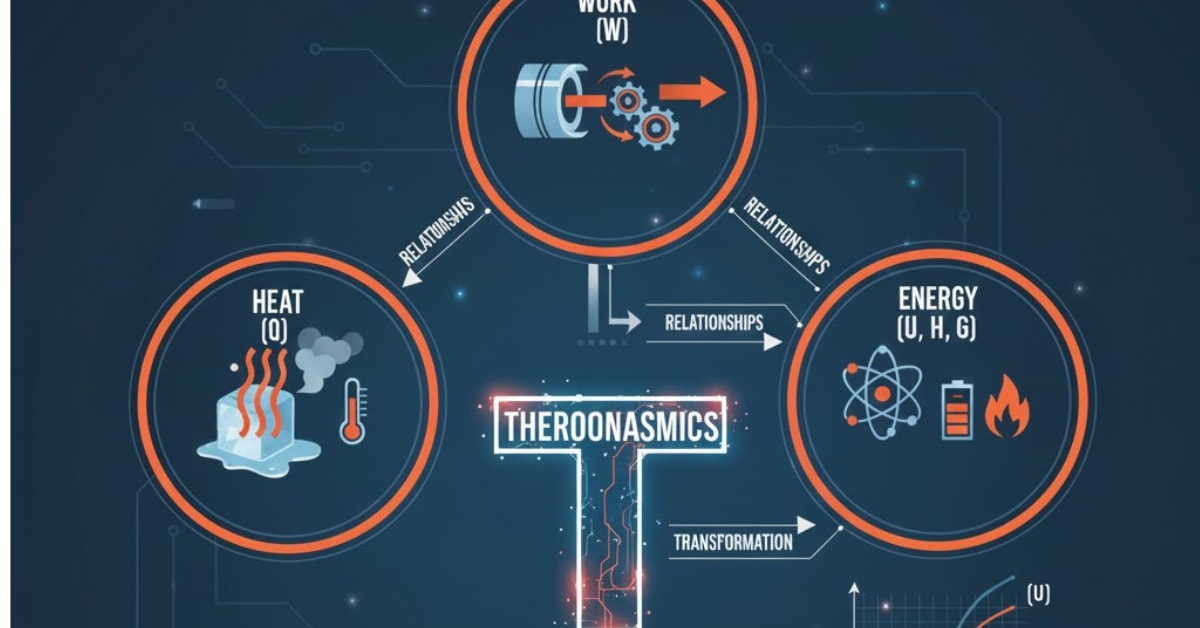
Thermodynamics literally means "heat motion" — it studies the relationships between heat, work, temperature, and energy. It emerged in the 19th century primarily through efforts to understand and improve steam engines, but its principles turned out to describe the universe at the most fundamental level. Thermodynamics explains not just machines, but chemical reactions, living organisms, stars, and the ultimate fate of the universe itself.
2. The Zeroth Law: Thermal Equilibrium
The Zeroth Law of Thermodynamics establishes the concept of temperature. It states that if two objects are each in thermal equilibrium with a third object, they are in thermal equilibrium with each other. In plain English: if object A and object B are both the same temperature as object C, then A and B are the same temperature as each other. This seemingly obvious statement provides the logical foundation for thermometers and temperature measurement. Without it, the entire concept of temperature couldn't be defined consistently.
3. The First Law: Conservation of Energy
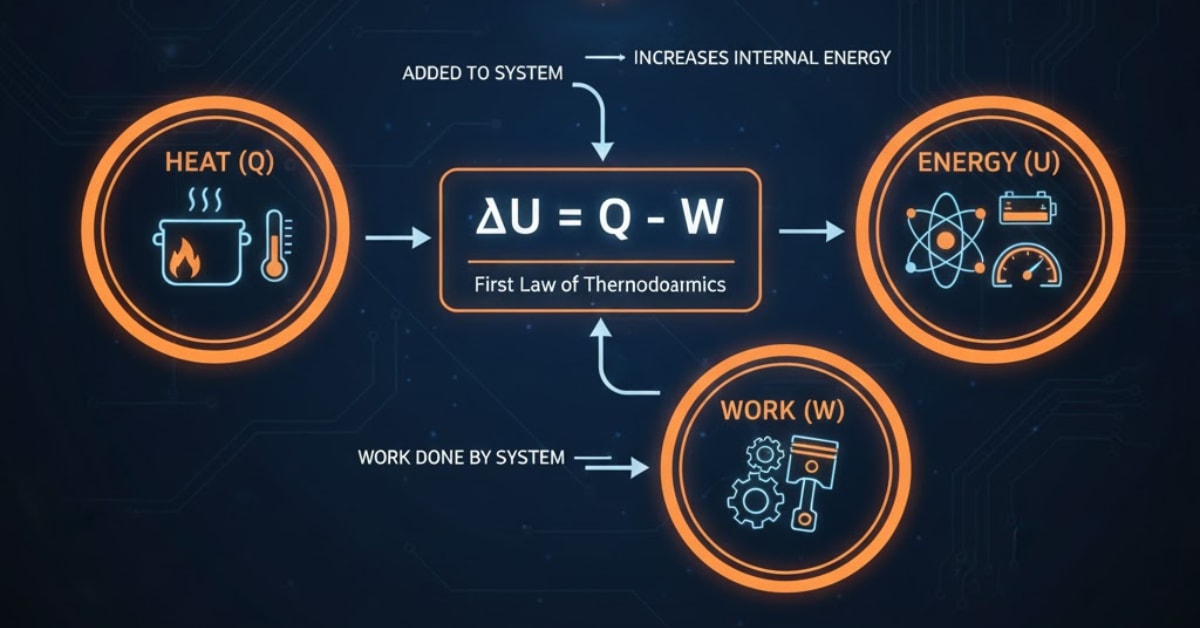
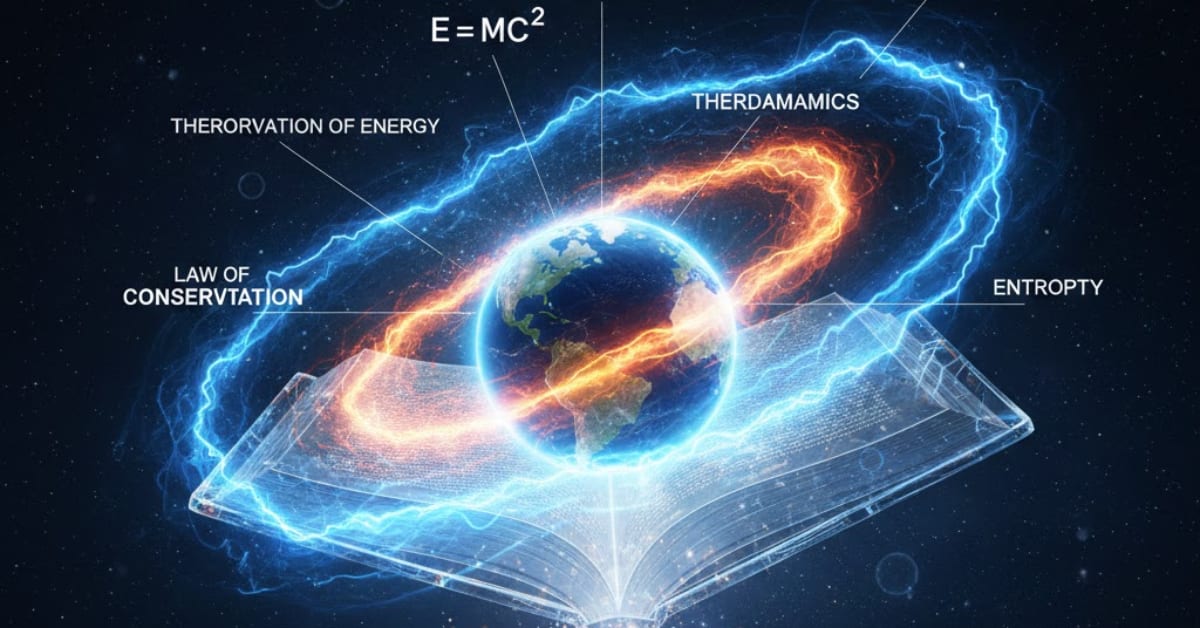
The First Law of Thermodynamics states that energy can neither be created nor destroyed — only transferred or converted from one form to another. The total energy of an isolated system remains constant. When you burn fuel in a car engine, the chemical energy in the fuel is converted to heat and mechanical work. When your body metabolizes food, chemical energy becomes heat and the mechanical energy of movement. Energy changes form constantly, but the total amount is always conserved. This is why perpetual motion machines — which would create energy from nothing — are impossible.
4. The Second Law: Entropy and the Direction of Time
The Second Law of Thermodynamics states that in any natural process, the total entropy of a closed system always increases or stays the same — it never decreases. Entropy is a measure of disorder or randomness. Heat naturally flows from hot objects to cold ones, never the reverse. Gases expand to fill available space, never spontaneously contract. This law gives time its direction — it's why you can't unscramble an egg, why broken glass doesn't reassemble, and why the universe tends toward greater and greater disorder over time.
5. The Third Law: Absolute Zero
The Third Law of Thermodynamics states that as the temperature of a system approaches absolute zero (−273.15°C or 0 Kelvin), its entropy approaches a minimum constant value. At absolute zero, a perfect crystalline substance has zero entropy — every atom is in its lowest energy state with perfect order. In practice, absolute zero can be approached asymptotically but never fully reached. This law has important implications for understanding the behavior of materials at extremely low temperatures, including superconductors and superfluids.
6. Heat and Temperature: Not the Same Thing
A common misconception is that heat and temperature are the same. They are fundamentally different. Temperature is a measure of the average kinetic energy of particles in a substance — how vigorously they're moving. Heat is the total thermal energy transferred between objects due to a temperature difference. A large lake at 20°C contains far more thermal energy (heat) than a small cup of boiling water at 100°C, even though the cup has a higher temperature. Understanding this distinction is essential for any deeper study of thermodynamics.
7. Heat Transfer: Conduction, Convection, and Radiation
Heat moves by three mechanisms. Conduction transfers heat through direct contact between particles — metal conducts heat well, wood poorly. Convection transfers heat through the movement of fluids (liquids or gases) — this is how heating systems warm rooms and how ocean currents distribute heat around the planet. Radiation transfers heat through electromagnetic waves without requiring matter — the Sun's heat reaches Earth across the vacuum of space entirely by radiation. All three mechanisms operate simultaneously in most real-world situations.
8. Thermodynamic Systems and Work
In thermodynamics, a "system" is whatever portion of the universe you're studying, and "work" refers to energy transfer through a mechanism other than heat — like a piston moving in a cylinder. The relationship between heat added to a system, work done by the system, and the change in the system's internal energy is captured in the First Law equation: ΔU = Q − W. This simple equation underlies the analysis of every heat engine, refrigerator, and thermodynamic cycle ever designed.
9. The Carnot Cycle and Efficiency Limits
Sadi Carnot showed in 1824 that there is a fundamental maximum efficiency for any heat engine operating between two temperatures. The Carnot efficiency depends only on the temperatures of the hot and cold reservoirs: efficiency = 1 − (T_cold / T_hot). No real engine can exceed this theoretical maximum. This discovery was revolutionary because it showed that engineering improvements alone could never produce a perfectly efficient engine — there is a physical law preventing it. Modern engineers still use Carnot efficiency as a benchmark against which real engine designs are measured.
10. Thermodynamics in Everyday Life
Thermodynamics is not just a classroom concept — it governs the devices and systems you use daily. Your refrigerator uses a thermodynamic cycle to pump heat from the cold interior to the warmer room. Your car engine converts fuel's chemical energy into mechanical work through thermodynamic cycles. Your body maintains a constant temperature through precise thermodynamic regulation of chemical reactions and heat exchange with the environment. Even the climate of Earth itself is governed by thermodynamic principles — the balance between solar energy absorbed and heat radiated back into space.
Thermodynamics is one of science's grandest achievements — a small set of simple principles that apply universally, from the smallest biochemical reaction to the largest astrophysical process. Once you grasp its core laws, you gain a powerful lens for understanding how energy flows through everything in the universe. And energy flow, ultimately, is what life, technology, and the cosmos are all built upon.
01. Basic Introduction to Thermodynamics
02. The Relationship Between Heat and Energy
03. Production of systems and their behaviour

04. The power of the laws of energy
05. The first law of thermodynamics
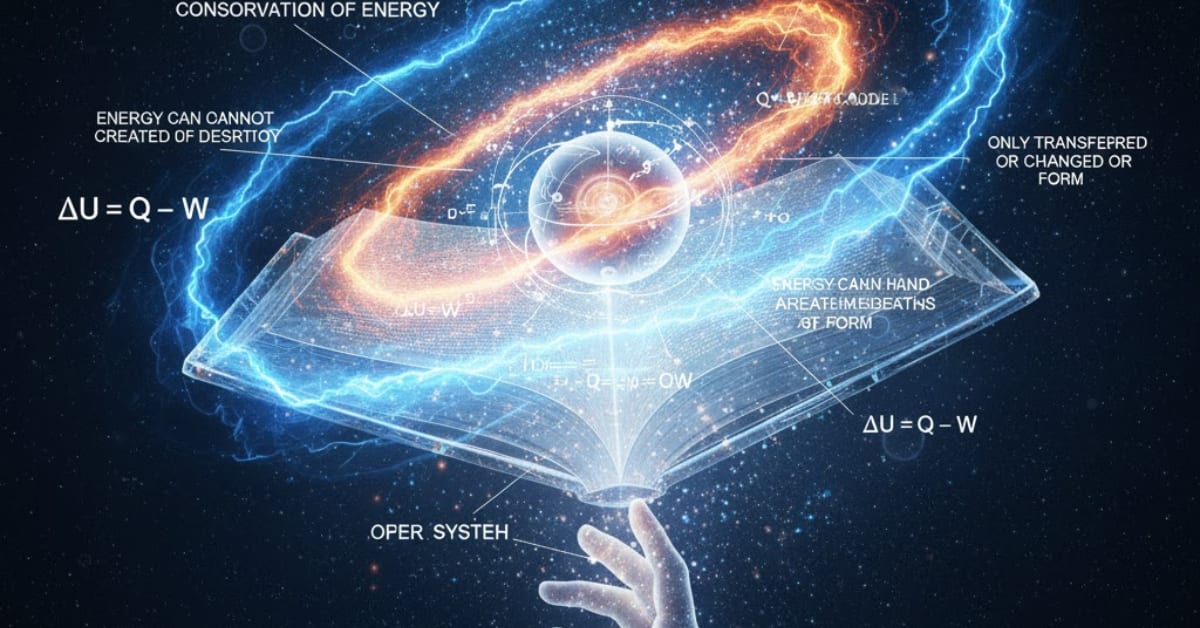
06. The Second Law and the Direction of Energy
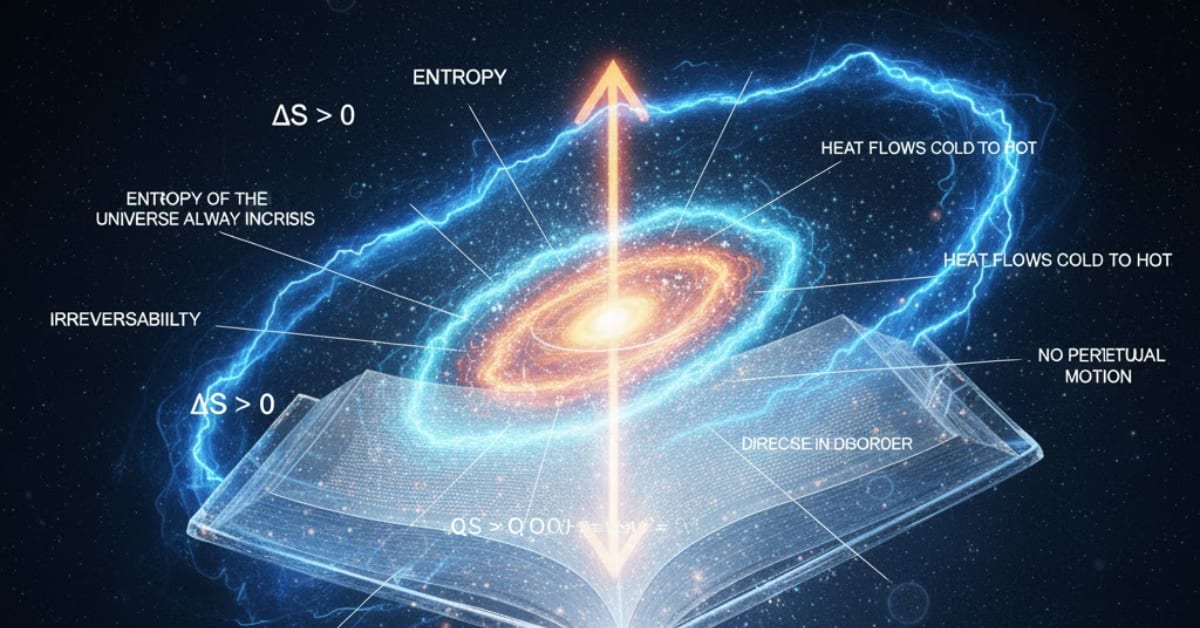
07. The Role of Entropy

08. Engines and Energy Conversion