Ideal Gas Law: Understanding the Relationship Between Pressure, Volume, and Temperature
By Sidra Tayyab · Education & Learning · 2025-12-09
Ideal Gas Law: Understanding the Relationship Between Pressure, Volume, and Temperature
The Ideal Gas Law is one of the most fundamental equations in chemistry and physics. It describes the behavior of gases and connects four key variables — pressure, volume, temperature, and the number of molecules — into one elegant equation. Understanding it opens the door to grasping how everything from car engines to weather systems to cooking works.
What Is the Ideal Gas Law?
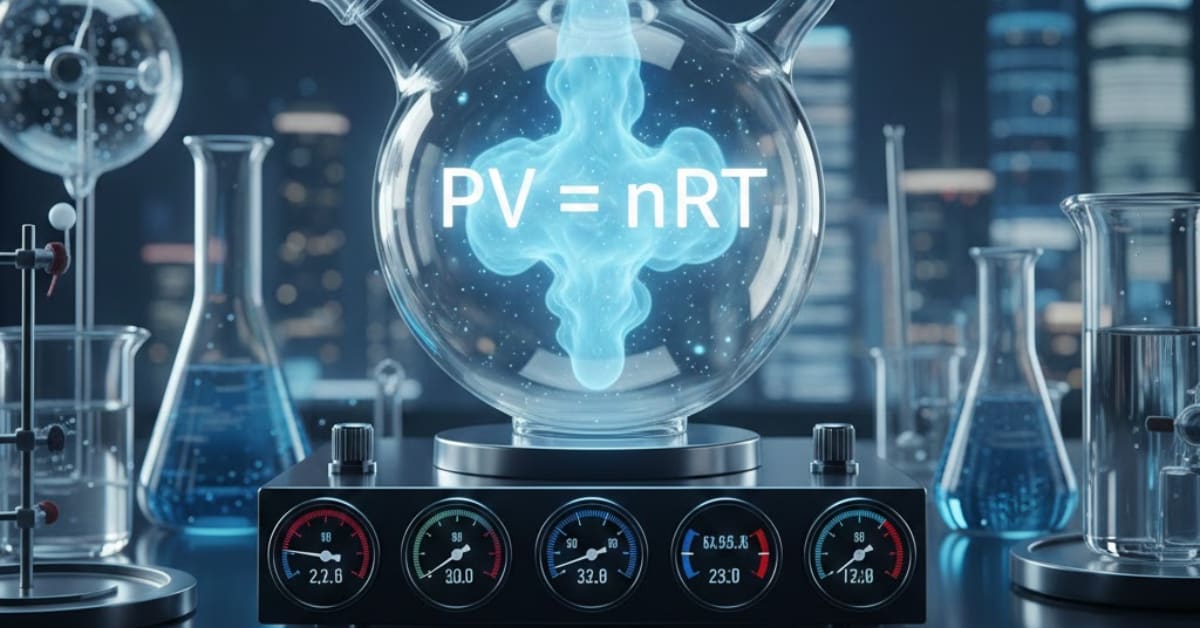
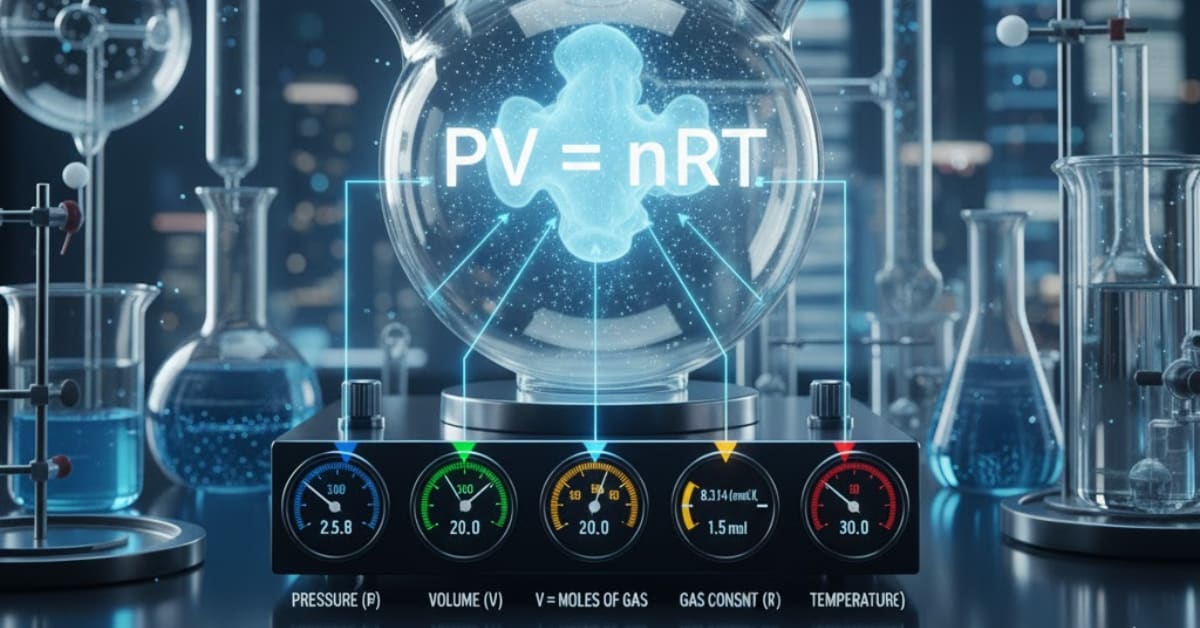
The Ideal Gas Law is expressed as: PV = nRT, where P is pressure, V is volume, n is the number of moles of gas, R is the universal gas constant (8.314 J/mol·K), and T is temperature in Kelvin. This single equation captures how gases behave under changing conditions.
What Is an "Ideal" Gas?
An ideal gas is a theoretical concept — a gas in which molecules have no intermolecular forces and occupy no volume themselves. In reality, no gas is perfectly ideal, but many common gases (like nitrogen, oxygen, and hydrogen) behave very closely to ideal under normal temperature and pressure conditions.
Pressure and Volume: Boyle's Law
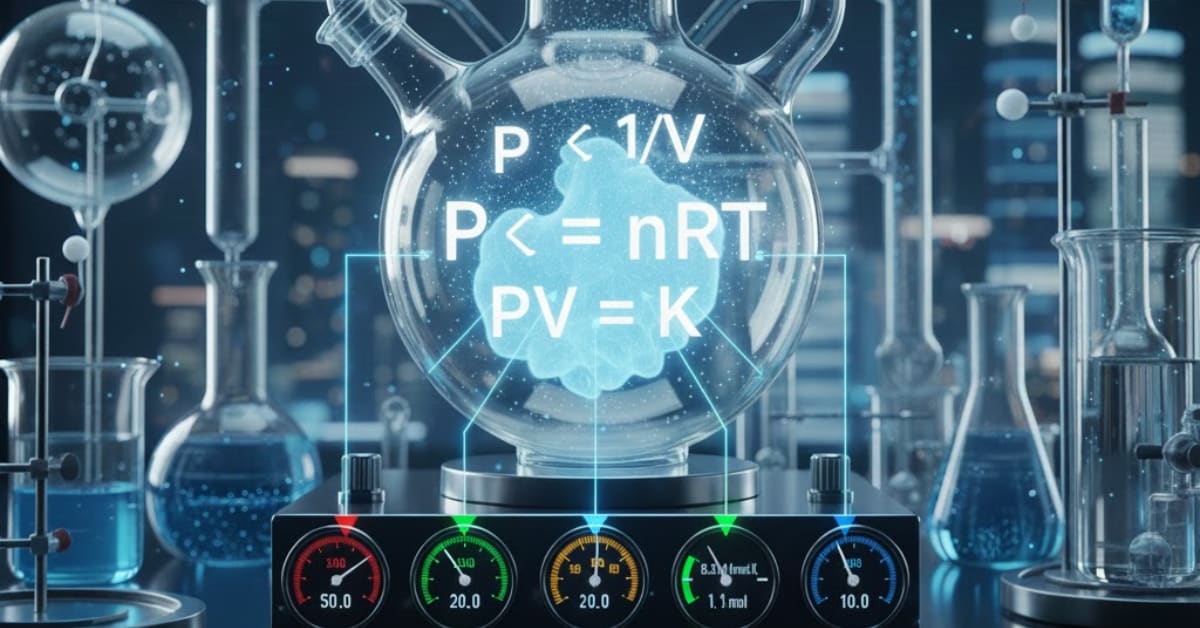
When temperature is held constant, pressure and volume are inversely related — as one increases, the other decreases proportionally. This is Boyle's Law (PV = constant). Squeeze a balloon and you increase the pressure of the gas inside by decreasing its volume. This principle powers syringes, bicycle pumps, and scuba equipment.
Volume and Temperature: Charles's Law
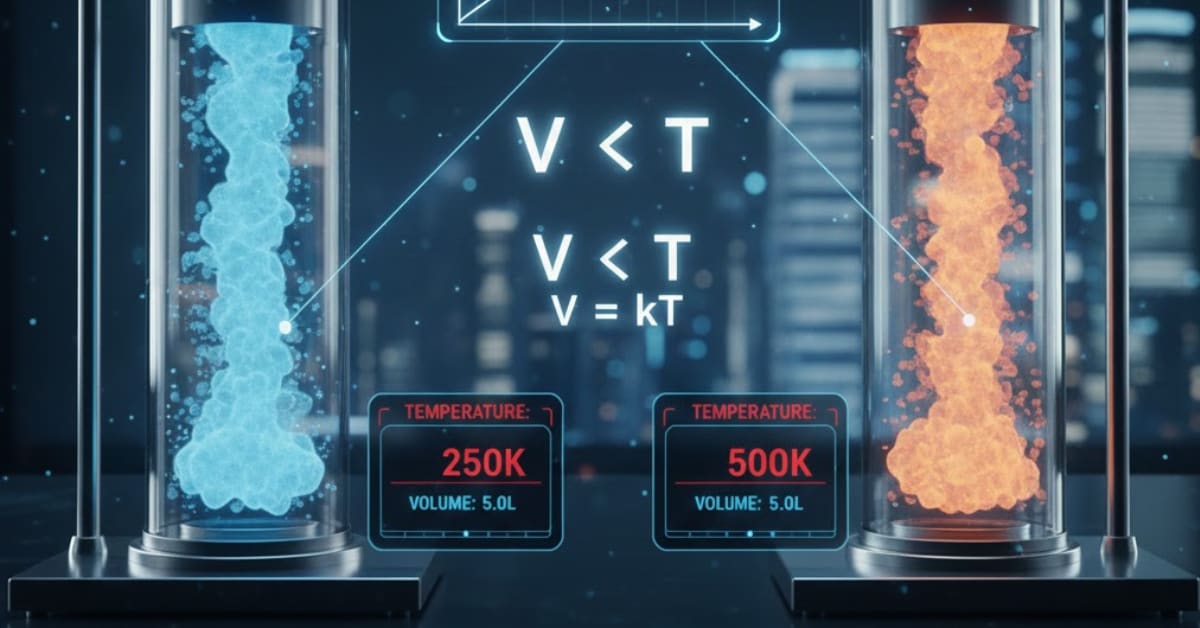
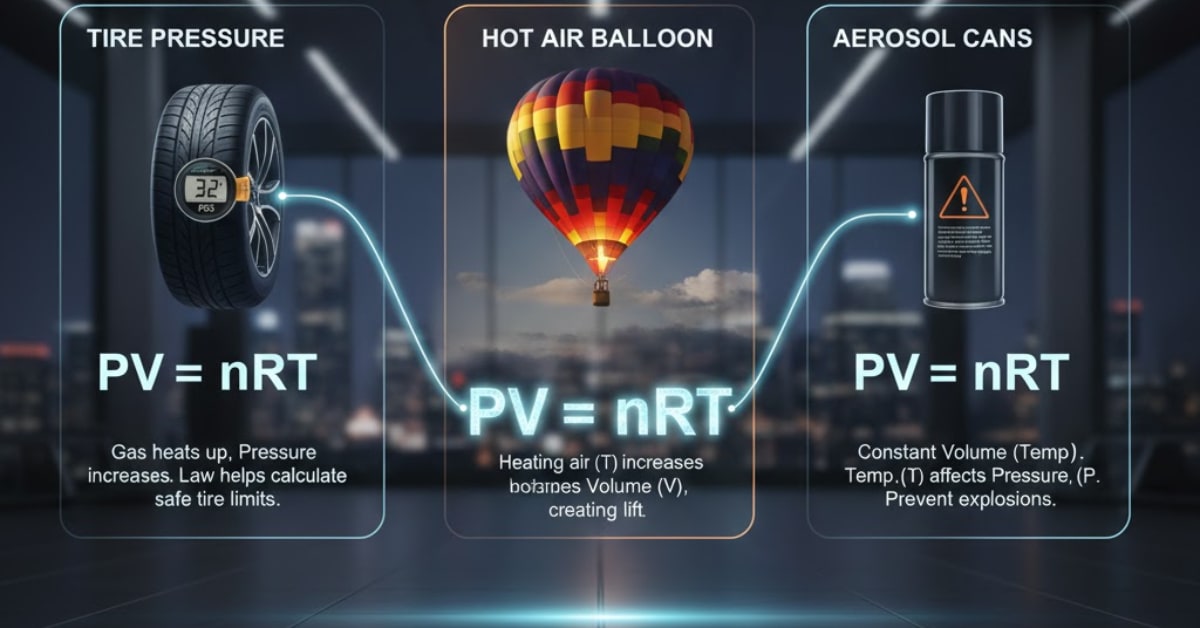
When pressure is held constant, volume and temperature are directly proportional — as temperature increases, volume increases. This is Charles's Law. A balloon filled with air will expand in hot weather and shrink in cold weather. Hot air balloons work entirely on this principle: heat the air inside, it expands, becomes less dense than the surrounding air, and the balloon rises.
Pressure and Temperature: Gay-Lussac's Law
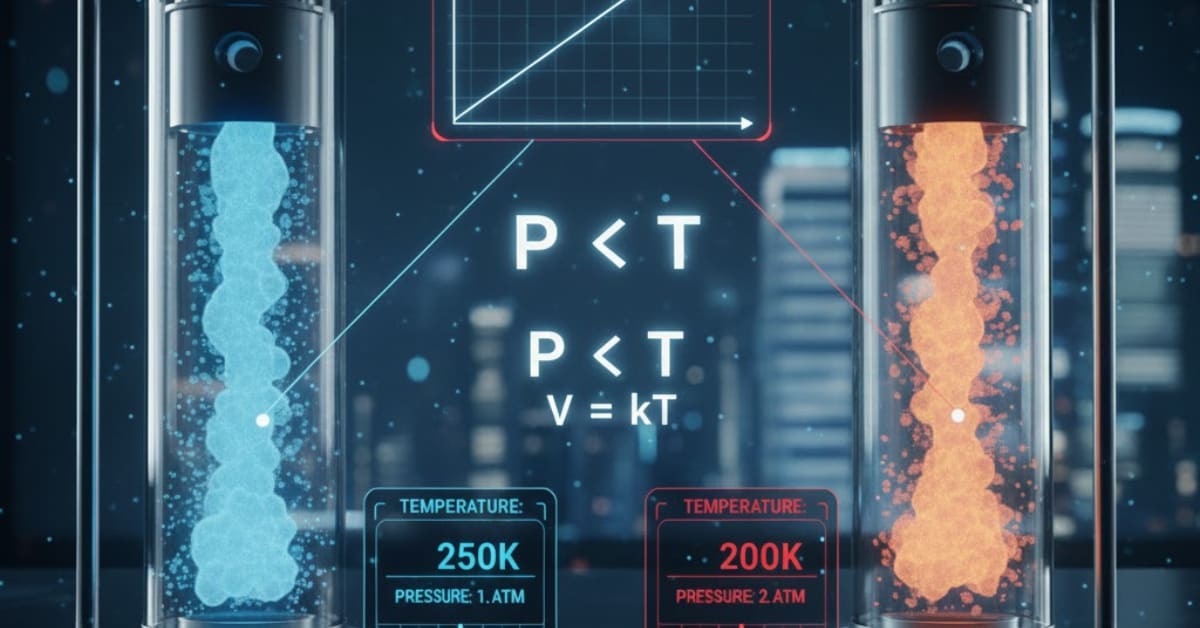
When volume is held constant, pressure and temperature are directly proportional. This is Gay-Lussac's Law. A sealed can of spray paint left in a hot car will have increased pressure inside. This is why aerosol cans carry warnings about heat exposure — the gas inside can build enough pressure to rupture the container.
The Combined Gas Law
Combining Boyle's, Charles's, and Gay-Lussac's laws gives us the Combined Gas Law, which relates all three variables simultaneously when the amount of gas remains constant. This is extremely useful for calculations involving gas samples that change conditions — like gas in a car cylinder during combustion.
Real-World Applications of the Ideal Gas Law
The Ideal Gas Law appears in countless everyday situations. Weather forecasting uses it to understand how air masses behave at different altitudes and temperatures. Medical devices like ventilators and anesthesia machines use it to precisely control gas flow. Industrial chemical production depends on it to calculate reaction conditions and yields.
Understanding Temperature in Kelvin
The Ideal Gas Law requires temperature in Kelvin, not Celsius or Fahrenheit, because Kelvin is an absolute temperature scale starting at absolute zero (-273.15°C), where all molecular motion stops. Gas volume and pressure go to zero at absolute zero — which is why we need an absolute scale for the law to work mathematically.
Limitations of the Ideal Gas Law
The Ideal Gas Law breaks down at very high pressures and very low temperatures, where intermolecular forces become significant and gas molecules take up appreciable space. Under these conditions, scientists use more complex equations like the Van der Waals equation that account for these real-gas behaviors.
Why the Ideal Gas Law Matters
The Ideal Gas Law is a cornerstone of modern science and engineering. It allows scientists and engineers to predict gas behavior, design equipment, calculate chemical reactions, and understand natural phenomena — all from one simple, elegant equation. Learning it is not just academic; it is understanding the invisible world of molecules that shapes everything around us.
The Ideal Gas Law is a perfect example of scientific elegance — a simple formula that explains complex behavior across an enormous range of conditions and applications. Master it, and you hold a key to understanding the physical world.
01. What is the Ideal Gas Law?
02. Ideal Gas Equation
03. Pressure and Volume Relationship
04. Temperature and Volume Relationship
05. Temperature and Pressure Relationship
06. Is the ideal gas law used in real life?
07. Why is the ideal gas law important?