Optics: A Simple Guide to Light and Optical Technology
By Sidra Tayyab · Education & Learning · 2025-12-12
Optics: A Simple Guide to Light and Optical Technology
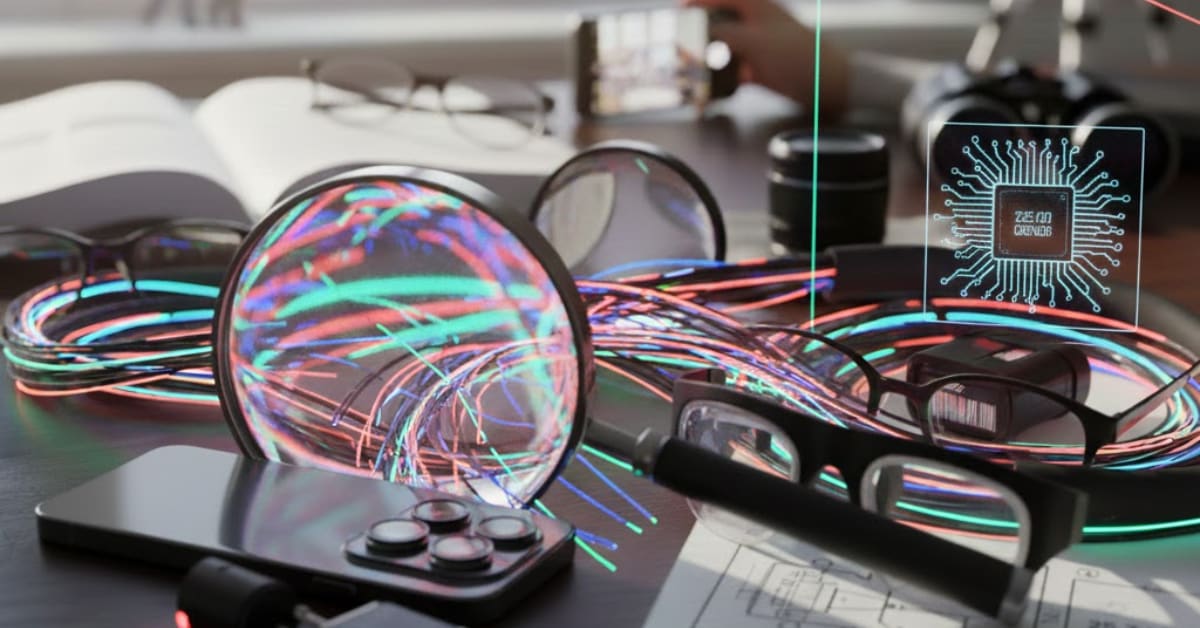
Every time you look in a mirror, wear glasses, take a photo, or see a rainbow, you are experiencing the physics of optics. Optics is the branch of physics that studies the behavior and properties of light, including how it interacts with matter, how it can be manipulated, and how it can carry information. From ancient Greek philosophers who first pondered how eyes work to modern fiber-optic networks that carry the internet around the world, optics has been at the heart of human curiosity and technological progress for millennia.
1. What Is Light?
Light is a form of electromagnetic radiation — a wave of oscillating electric and magnetic fields that travels through space at approximately 300,000 kilometers per second in a vacuum. The visible light that humans can see occupies only a tiny slice of the electromagnetic spectrum, with wavelengths ranging from about 380 nanometers (violet) to 700 nanometers (red). Beyond visible light, the spectrum extends to infrared, ultraviolet, X-rays, radio waves, and more — all forms of light that obey the same fundamental optical principles.
2. Reflection: How Mirrors Work
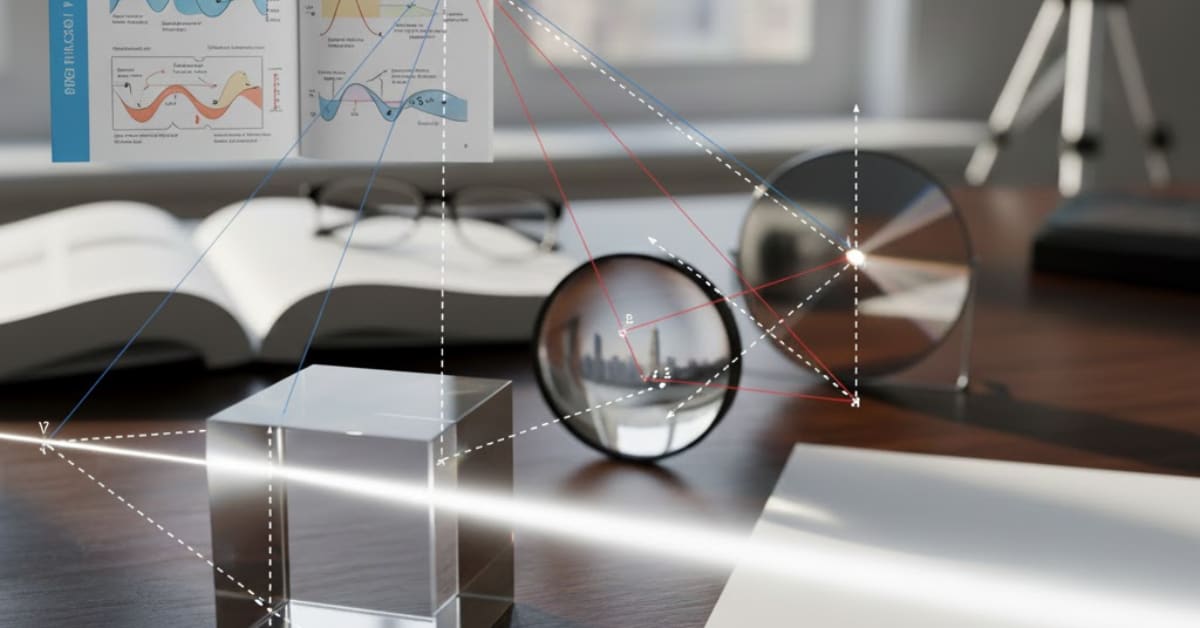
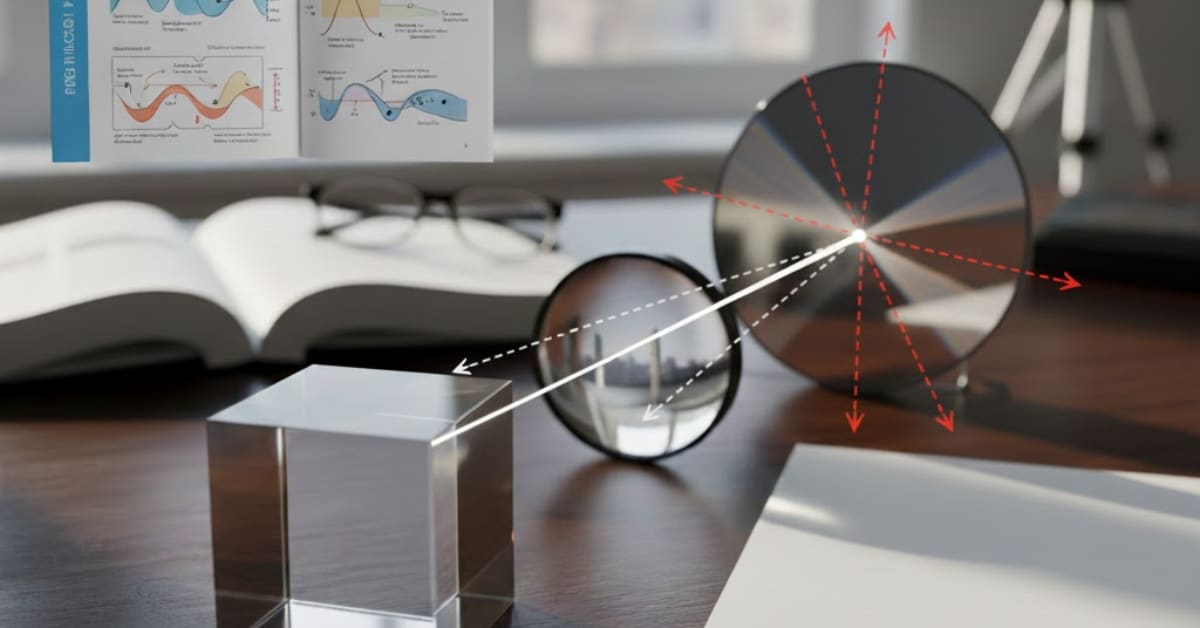
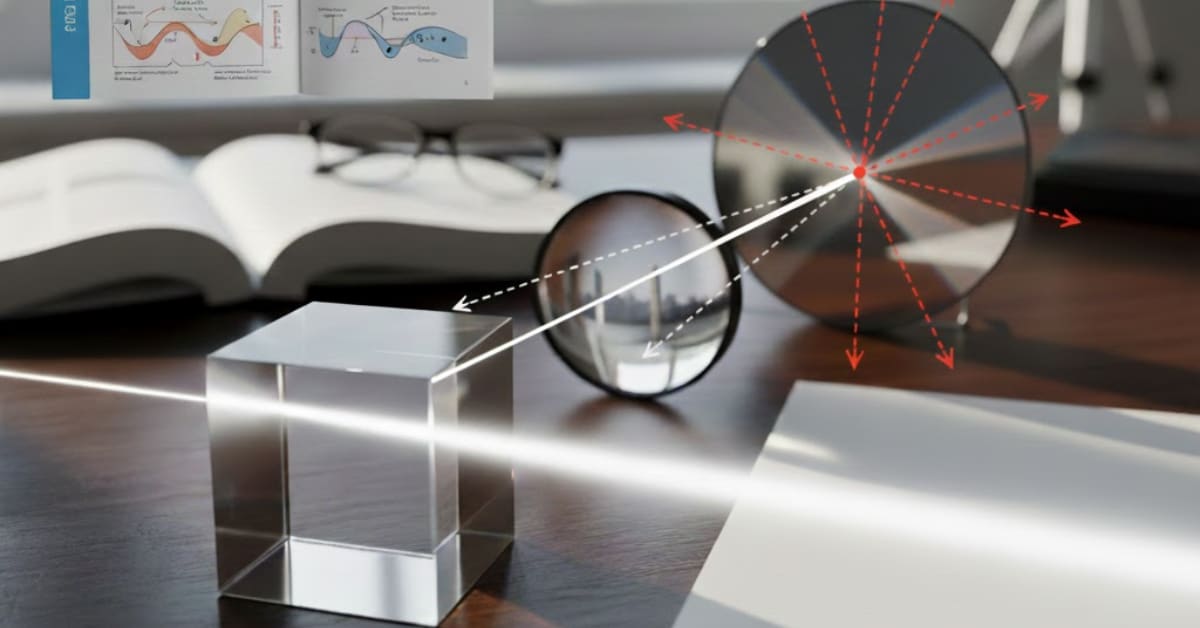
Reflection occurs when light strikes a surface and bounces back. The law of reflection states that the angle at which light hits a surface (the angle of incidence) equals the angle at which it bounces away (the angle of reflection). Smooth, polished surfaces like mirrors reflect light in a regular, predictable pattern — specular reflection — producing a clear image. Rough surfaces scatter light in many directions — diffuse reflection — which is why you can see a wall but not your reflection in it.
3. Refraction: Why Things Look Bent in Water
When light passes from one transparent medium to another — say from air into water or glass — it changes speed and bends. This bending is called refraction. The amount of bending depends on the refractive index of each material and Snell's Law, which mathematically relates the angles of incoming and refracted light. Refraction explains why a spoon in a glass of water appears to bend at the water's surface, why diamonds sparkle so brilliantly, and — most importantly — how lenses work in glasses, cameras, and microscopes.
4. Lenses and How They Focus Light
Lenses use refraction to focus or spread light in controlled ways. A convex (converging) lens bends parallel light rays inward to meet at a focal point — this is how magnifying glasses, camera lenses, and the human eye focus images. A concave (diverging) lens bends rays outward, spreading them apart — useful for correcting nearsightedness. The relationship between focal length, object distance, and image distance is described by the thin lens equation, one of the most practically useful formulas in all of optics.
5. Dispersion and Rainbows
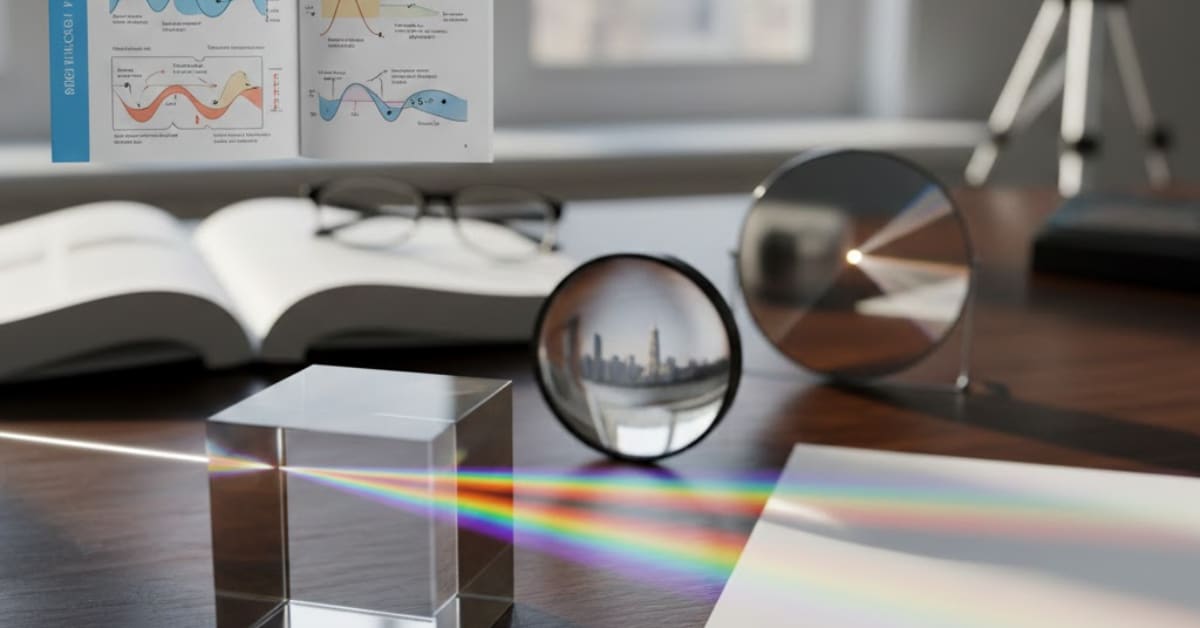
Different wavelengths of light refract at slightly different angles when passing through a medium — a phenomenon called dispersion. When white sunlight enters a glass prism or a water droplet, each color bends a different amount, spreading the light into its component colors: the visible spectrum. A rainbow is nature's most spectacular demonstration of dispersion — millions of water droplets in the atmosphere each acting as a tiny prism, together painting the entire visible spectrum across the sky at a specific angle relative to the sun.
6. Diffraction and Interference
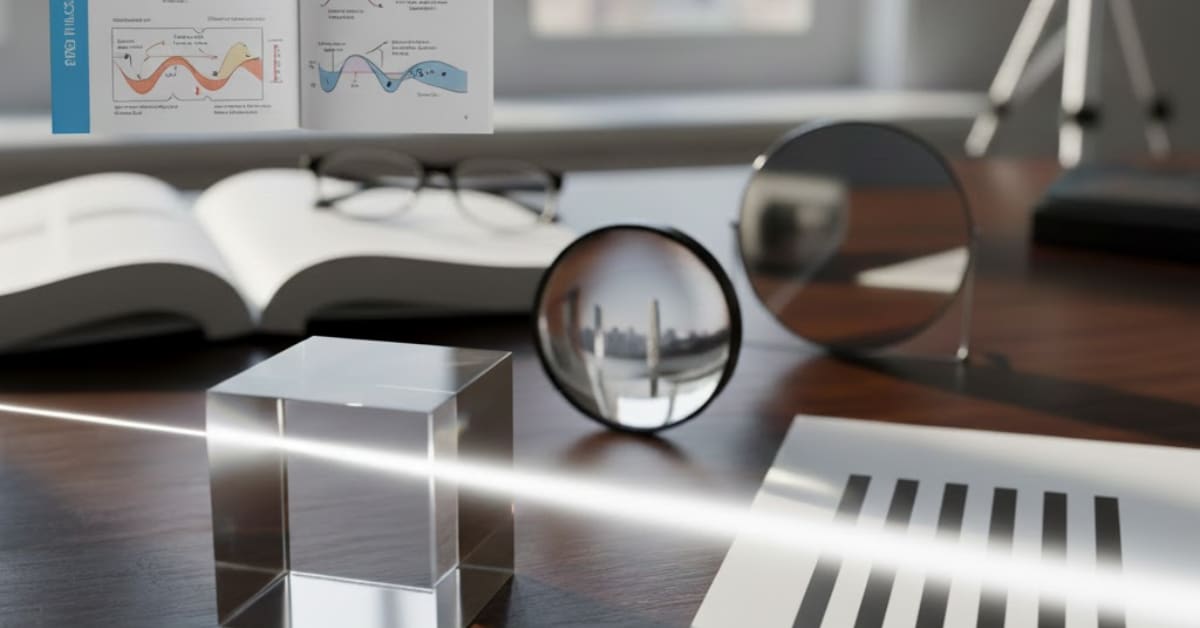
Light behaves like a wave, which means it can diffract (bend around obstacles and through narrow openings) and interfere (waves combining to produce brighter or darker regions). Diffraction gratings — surfaces with thousands of fine parallel lines — separate white light into spectra more efficiently than prisms and are used in scientific instruments like spectrometers. Interference is exploited in technologies like anti-reflective coatings on camera lenses and eyeglasses, where thin film layers create destructive interference that cancels out reflected light.
7. Fiber Optics: Light Carrying Information
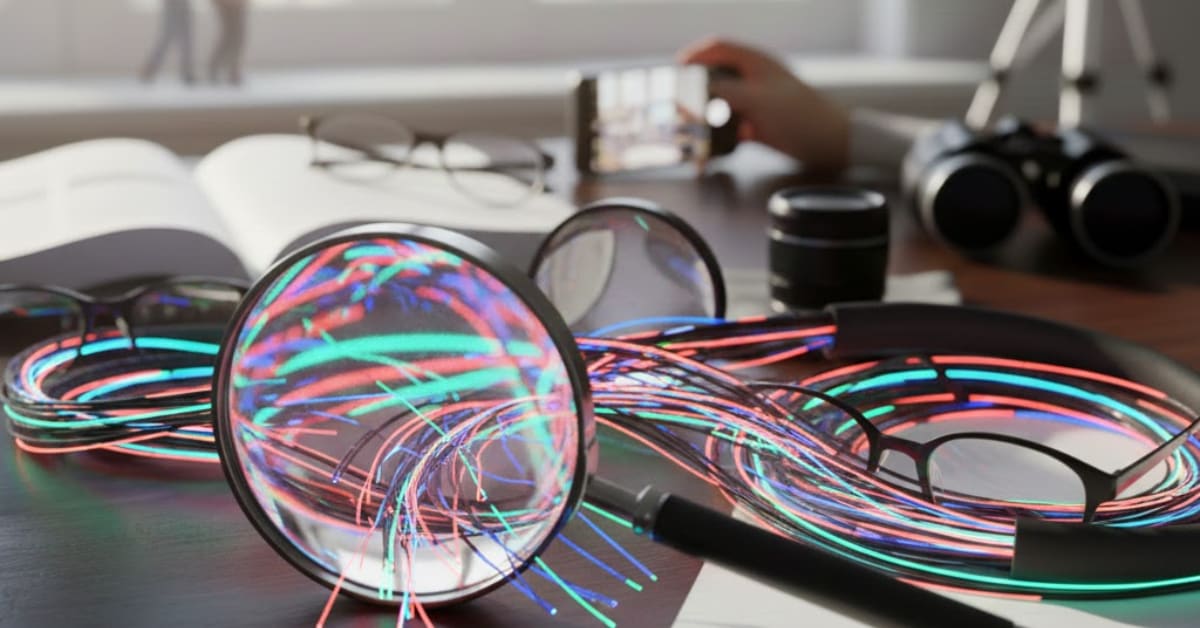
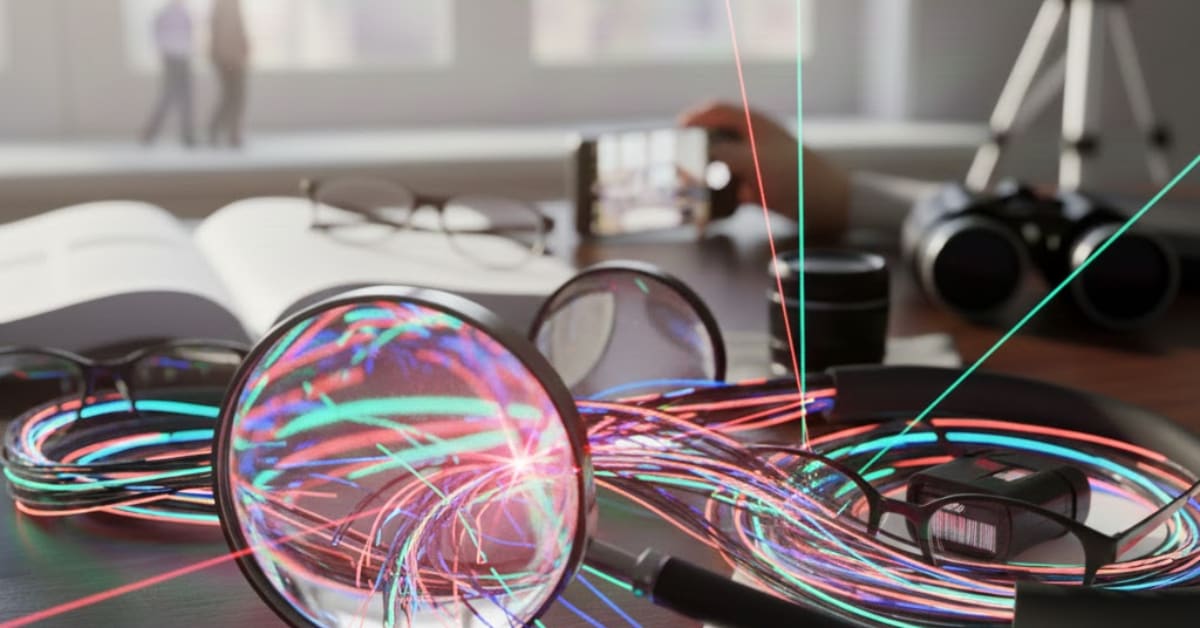
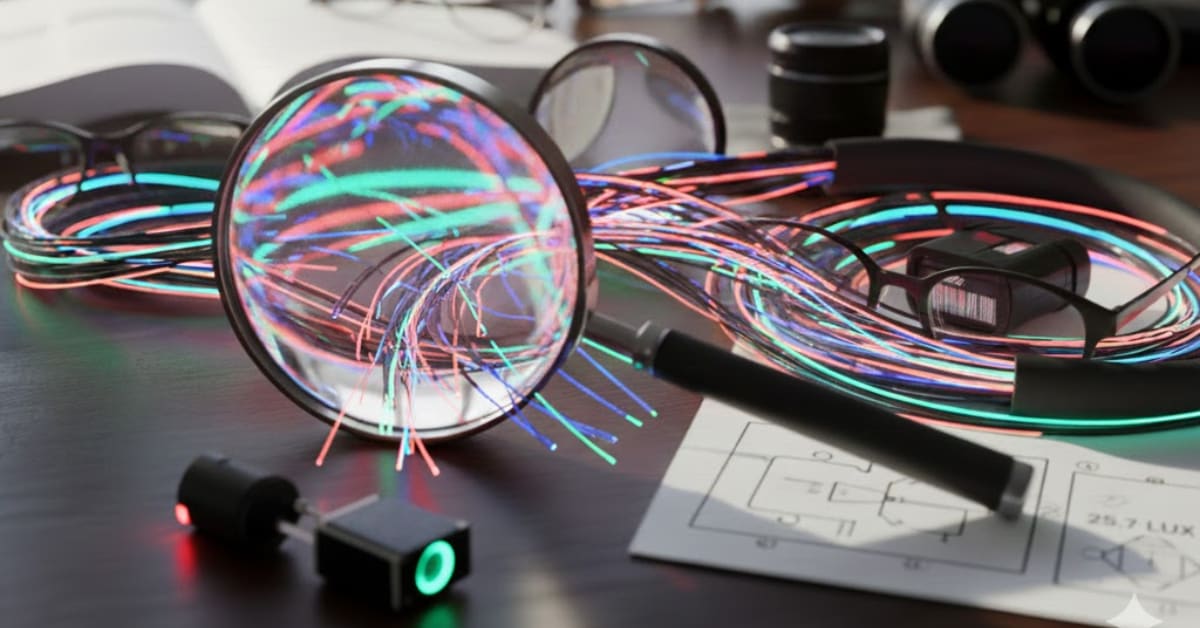
Fiber optic cables use a phenomenon called total internal reflection — light that hits the boundary between the glass fiber and its cladding at a shallow angle bounces back inside rather than escaping. This traps light pulses inside hair-thin glass fibers, allowing them to carry enormous amounts of information over vast distances with minimal loss. Fiber optic networks form the backbone of the modern internet, capable of transmitting data at nearly the speed of light across continents and ocean floors, enabling the connected world we inhabit.
8. Lasers: Coherent Light
Ordinary light sources emit photons with random phases and directions — incoherent light. A laser (Light Amplification by Stimulated Emission of Radiation) produces photons that are all the same wavelength, traveling in the same direction, and in phase — coherent light. This unique property makes laser light extraordinarily precise and concentrated. Lasers have applications ranging from cutting metal and performing delicate eye surgery to reading Blu-ray discs, measuring distances to the moon with centimeter precision, and enabling the quantum computing research of the future.
9. The Human Eye as an Optical System
The human eye is a remarkably sophisticated optical instrument. Light enters through the cornea (which provides most of the eye's focusing power), passes through the adjustable crystalline lens (which fine-tunes focus for objects at different distances), and is focused onto the retina — a light-sensitive surface containing over 100 million photoreceptors. The retina converts light into electrical signals that the brain processes into the visual world we experience. Common vision problems like nearsightedness and farsightedness arise from optical mismatches that corrective lenses easily compensate for.
10. The Future of Optical Technology
Optics sits at the frontier of multiple cutting-edge technologies. Photonic integrated circuits — optical chips that process light instead of electrons — promise to revolutionize computing with speeds and efficiencies that silicon electronics cannot match. Quantum optics enables quantum key distribution: theoretically unbreakable communication secured by the fundamental laws of physics. Adaptive optics systems use deformable mirrors to correct for atmospheric turbulence in real time, allowing ground-based telescopes to achieve image quality rivaling space observatories. From medicine to communications to fundamental physics research, the future of optics is extraordinarily bright.
Optics is a field that connects the most fundamental questions about the nature of light with the most practical technologies of everyday life. Every time you take a photo, video call a friend, or simply look out a window, you are participating in thousands of years of human inquiry into how light works. Understanding optics is understanding one of the most fundamental ways the universe reveals itself to us.
01. What is optics?
02. Geometrical optics
03. Physical Optics
04. Mirrors and Image Formation
05. Lenses and Refraction
06. Optics in everyday life

07. Fiber Optics Technology
08. Laser Light Applications
09. Optical Sensors
10. Optics in modern devices