The Power of Sound Waves: How They Shape Our World
By Sidra Tayyab · Education & Learning · 2025-11-20
The Power of Sound Waves: How They Shape Our World
Close your eyes and listen. Everything you hear — voices, music, the wind, traffic, rain — arrives as sound waves: oscillating compressions and rarefactions of air molecules that your ears translate into the rich, layered soundscape of experience. Sound is so fundamental to human life that we rarely stop to consider how remarkable it actually is, or how profoundly sound waves shape everything from the structure of the cosmos to the function of medicine. Here's a closer look at the extraordinary physics and applications of sound.
1. What Is Sound?
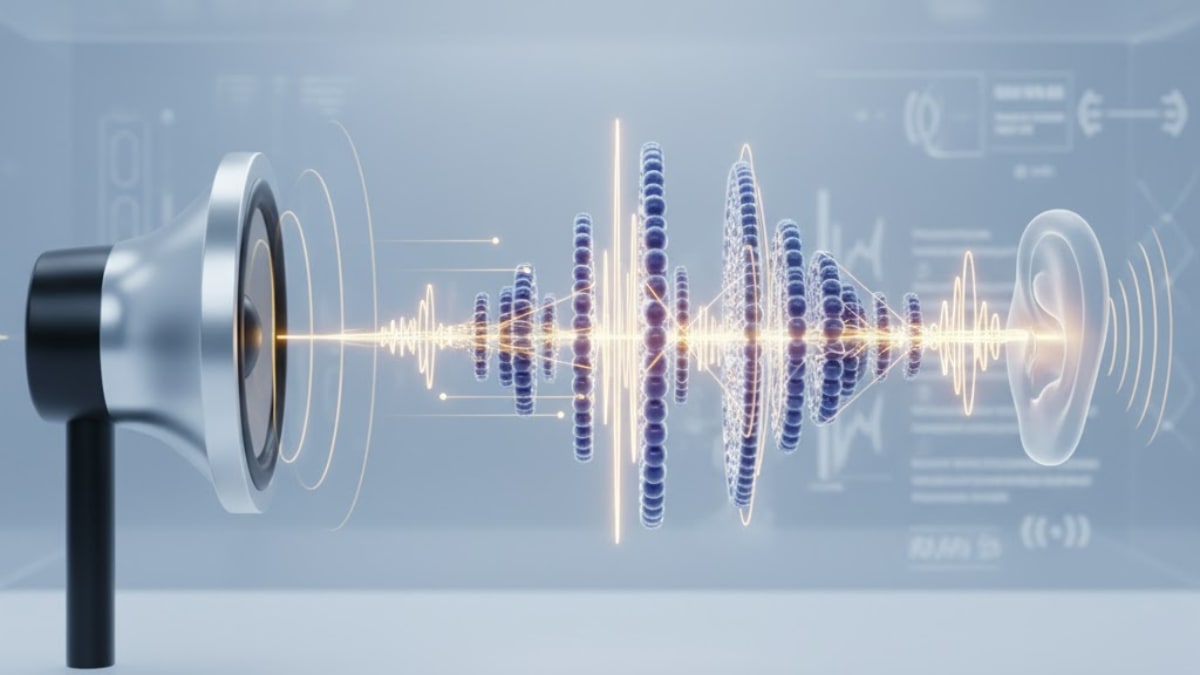
Sound is a mechanical wave — a disturbance that propagates through a medium (typically air, but also water, solids, and other materials) by causing adjacent particles to vibrate and pass the disturbance along. Unlike light, sound cannot travel through a vacuum because it requires particles to compress and expand. Sound travels as longitudinal waves: the particles oscillate back and forth in the same direction the wave is traveling, creating alternating regions of compression (high pressure) and rarefaction (low pressure) that move outward from the source.
2. The Speed of Sound
Sound travels at approximately 343 meters per second (about 1,235 km/h) in air at room temperature — far slower than light's 300,000 km/s. The speed of sound increases with temperature (warmer air has more energetic molecules that transmit vibrations faster) and varies dramatically between media. Sound travels about four times faster in water than in air, and about 15 times faster in steel. This is why you can hear whales communicating across ocean basins — water is an exceptional sound transmission medium. "Breaking the sound barrier" — exceeding 343 m/s — creates a sonic boom as the aircraft overtakes the pressure waves it generates.
3. Frequency and Pitch
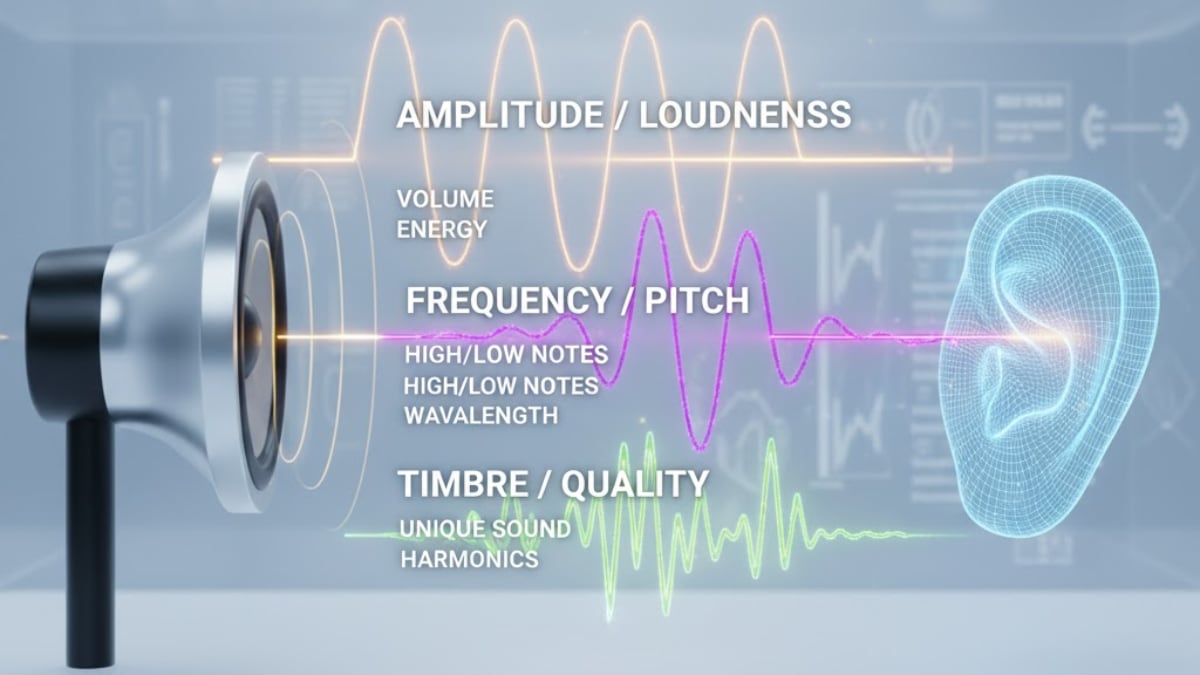
The frequency of a sound wave — measured in Hertz (Hz), or cycles per second — determines its pitch. Humans can typically hear frequencies from about 20 Hz (a deep bass rumble) to 20,000 Hz (a very high squeak), though this range narrows with age. Dogs can hear up to 65,000 Hz; dolphins up to 150,000 Hz. Sounds below 20 Hz are infrasound — produced by earthquakes, thunder, and large animals like elephants — and sounds above 20,000 Hz are ultrasound. Both have important applications in science, medicine, and nature.
4. Amplitude and Loudness
A sound wave's amplitude — the magnitude of the pressure variations — determines its loudness, measured in decibels (dB). The decibel scale is logarithmic: an increase of 10 dB represents a tenfold increase in sound intensity. A whisper is about 30 dB, normal conversation about 60 dB, a lawnmower about 90 dB, and a jet engine at close range about 140 dB. Sound levels above 85 dB cause progressive hearing damage with prolonged exposure; above 120 dB, even brief exposure can cause immediate harm. Noise-induced hearing loss affects hundreds of millions of people worldwide.
5. Resonance: When Frequencies Match
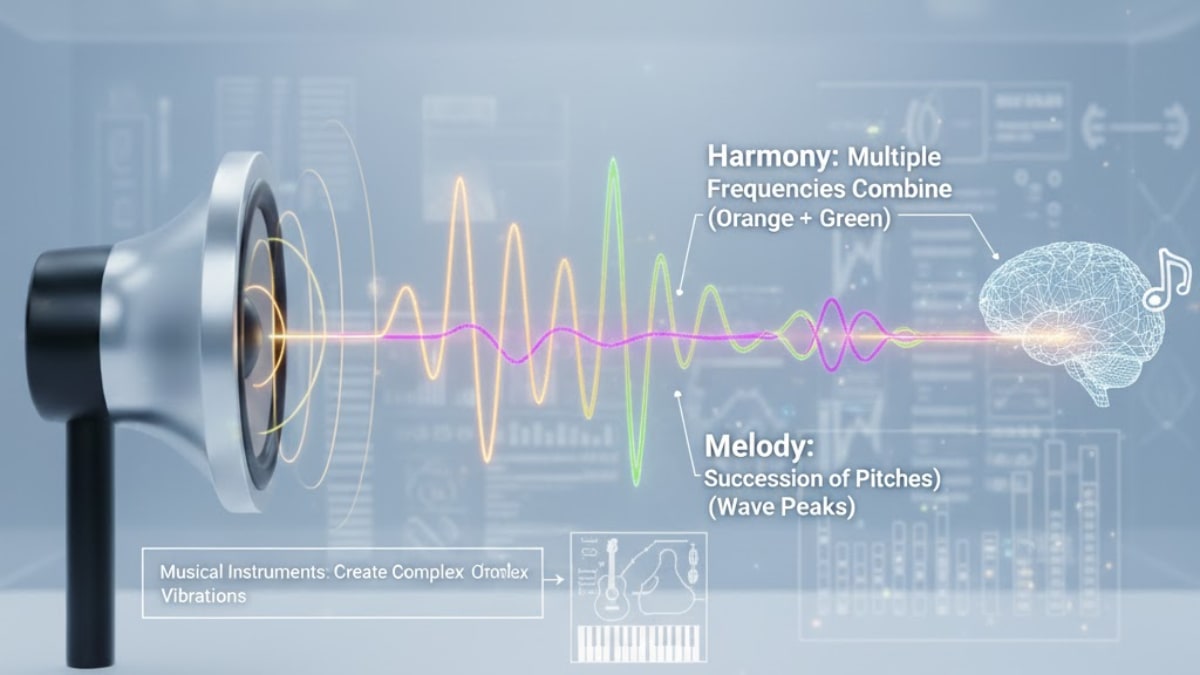
Resonance occurs when a sound wave at a frequency matching an object's natural vibration frequency causes that object to vibrate with dramatically increased amplitude. Every object has one or more natural resonant frequencies determined by its shape, size, and material properties. Resonance is the principle behind musical instruments — a guitar string vibrates at its resonant frequency when plucked, producing a sustained tone. It's also behind the legendary (if disputed) claim that opera singers can shatter wine glasses with their voice at precisely the right frequency. Engineers must carefully account for resonance in structures — the Tacoma Narrows Bridge collapsed in 1940 due to wind-induced resonance.
6. The Doppler Effect
When a sound source moves relative to a listener, the perceived pitch changes — the well-known Doppler effect. As an ambulance approaches, the sound waves are compressed (higher pitch); as it passes and recedes, they stretch (lower pitch). This happens because the moving source "catches up" to the waves it produces in the direction of motion, increasing their frequency. The Doppler effect has profound applications: police radar guns use it to measure vehicle speed, meteorologists use Doppler radar to map storm movements, and astronomers use the Doppler shift of light from stars to measure their velocities.
7. Ultrasound in Medicine
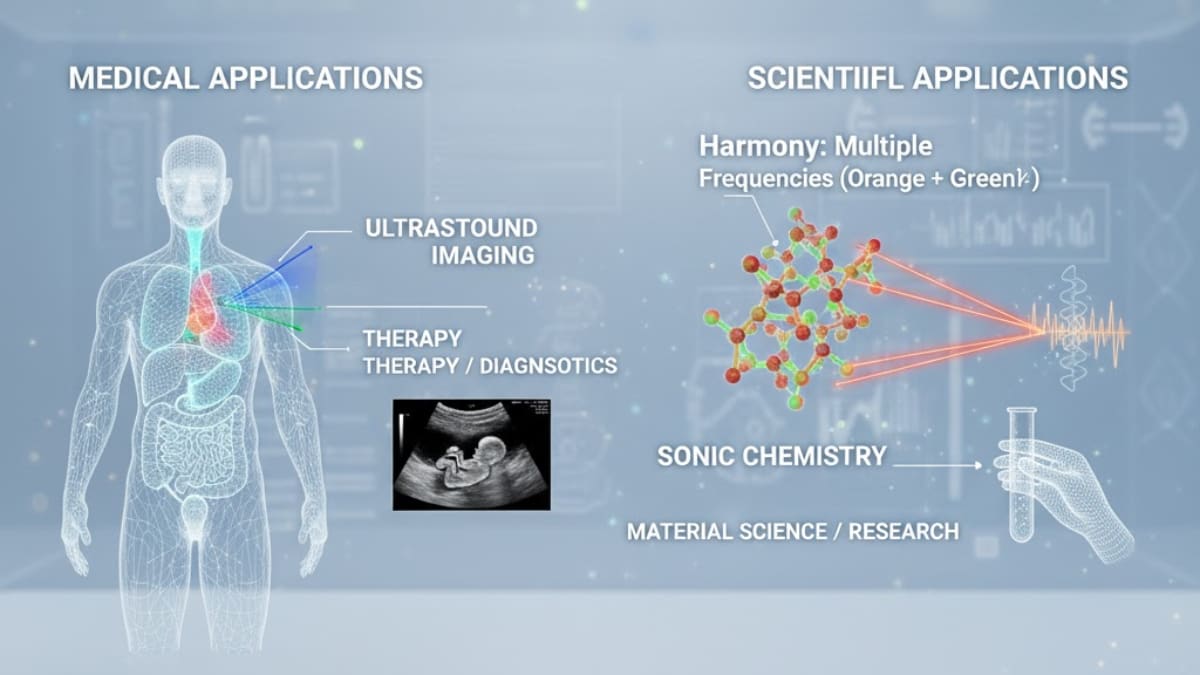
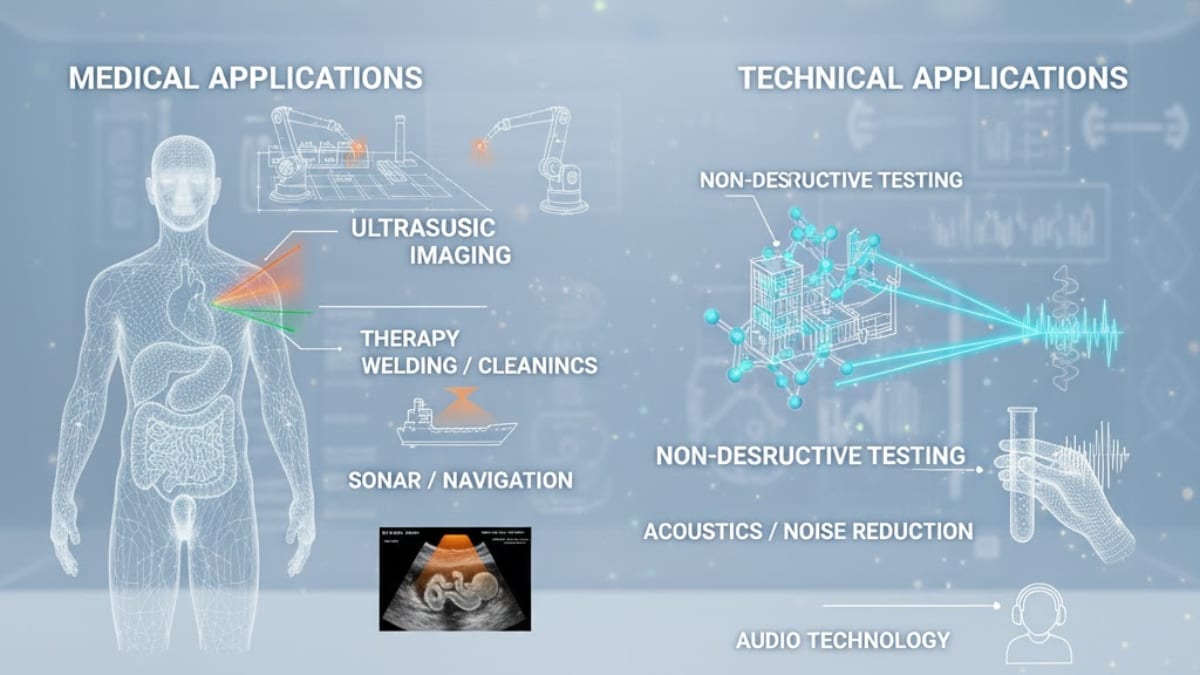
Medical ultrasound uses high-frequency sound waves (typically 2-18 MHz) far beyond the range of human hearing to create detailed images of internal body structures. The ultrasound probe emits pulses of sound that reflect off tissue boundaries at different depths; the pattern of returning echoes is processed into real-time imagery. Ultrasound imaging is central to obstetrics (fetal development monitoring), cardiology (echocardiography), and diagnostic medicine generally. It's non-ionizing (unlike X-rays), produces no known biological harm at diagnostic intensities, and can image soft tissue in ways that X-rays cannot.
8. Sonar and Echolocation
Bats, dolphins, and whales navigate and hunt using biological sonar — emitting ultrasound pulses and processing the returning echoes to construct detailed three-dimensional maps of their environment. Bats can detect prey the size of a moth in complete darkness and make flight course corrections within milliseconds based on sonar returns. Human-engineered sonar systems work on identical principles: naval vessels use active sonar to detect submarines; scientists use sonar to map ocean floor topography; fishfinders use it to locate schools of fish. The principles evolved in biology hundreds of millions of years before human engineers independently reinvented them.
9. Sound in Architecture and Acoustics
The science of acoustics — how sound behaves in physical spaces — shapes everything from concert hall design to office productivity. A concert hall must distribute sound evenly to every seat, avoid echoes and reverberations that obscure musical clarity, and enhance certain frequency ranges that give music its warmth and presence. Acoustic engineers model sound wave reflection, absorption, and diffraction in three-dimensional spaces using sophisticated software to optimize architectural designs before construction begins. Conversely, noise pollution in offices and schools has been extensively studied — unwanted sound significantly degrades concentration, task performance, and learning outcomes.
10. Sound as a Tool for the Future
Researchers are exploring applications of sound that push far beyond conventional audio. Acoustic levitation — using standing sound waves to suspend small objects in mid-air — has been demonstrated as a potential tool for manipulating delicate materials in manufacturing and space. High-intensity focused ultrasound (HIFU) can non-invasively destroy tumors by concentrating ultrasound energy at a precise point inside the body, heating tissue to lethal temperatures without surgery. Acoustic metamaterials — engineered structures that manipulate sound waves in unusual ways — can redirect, focus, or completely silence sound in ways impossible with natural materials. The science of sound continues to produce extraordinary applications that are only beginning to be realized.
Sound is so woven into human experience that we rarely notice it except in its absence. But the physics of sound waves is genuinely one of nature's most rich and consequential fields — governing communication, music, medicine, engineering, navigation, and our deepest sense of the world around us. The next time you hear something that moves you — music, a voice, the sound of rain — remember: it's a wave, and it has traveled through space to reach you. That's both science and something more.
01. Basic Definition of Sound Waves
02. Characteristics of Sound Waves
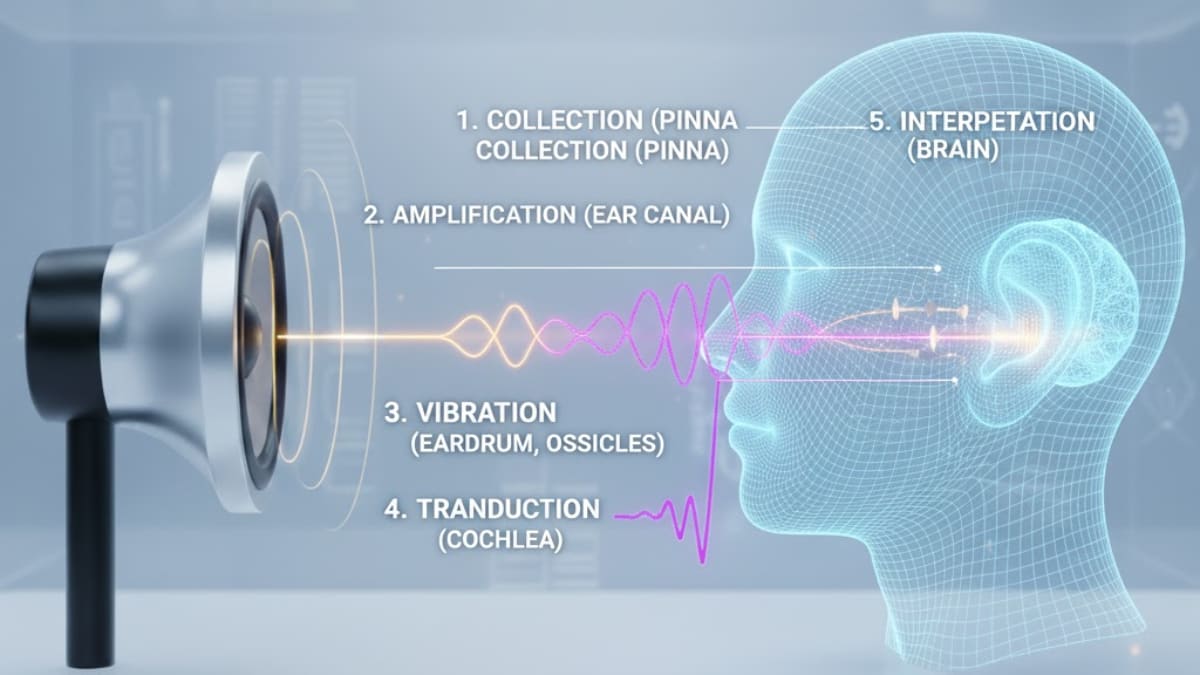
03. Humans and Sound Waves
04. Music and Sound Waves
05. Medical and Scientific Applications
06. Industrial and Technical Applications
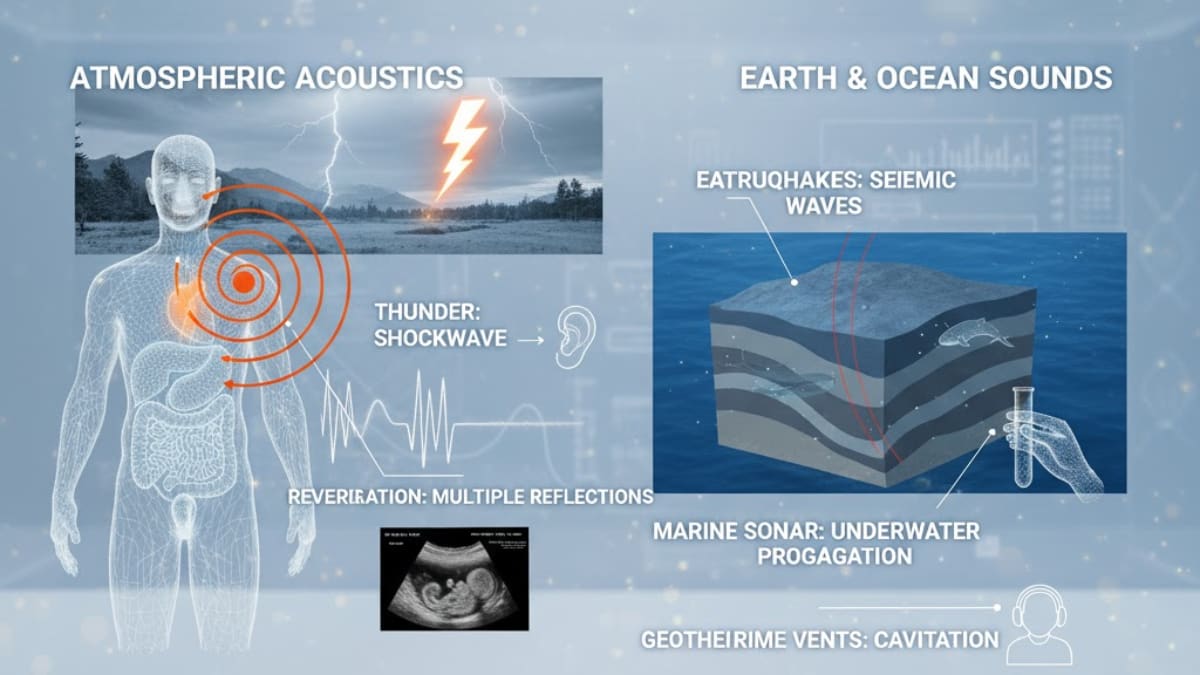
07. Natural phenomena in sound waves